
Most people look at a dead branch and see an eyesore. Something to deal with eventually. But when that branch is hanging over a parking lot used daily by patients, staff, and emergency vehicles, "eventually" is the wrong timeline.
This is what makes deadwood near high-traffic areas like Copley Hospital different from a dead limb at the back of your yard. The stakes are not the same, and the thinking behind the work should not be either.
What Deadwood Actually Means, and Why Location Changes Everything?
A dead branch does not just stop growing. It dries out, the wood fibers lose their flexibility, and the attachment point to the living tissue weakens gradually. What keeps it up is often less than it appears from below.
In a quiet corner of a back lot, that branch may fall one night and the only thing harmed is the grass. But over a walkway, a parking area, or a drive lane used by ambulances, the picture is completely different. The question is not whether a dead limb will eventually fall. It is whether you want to decide when that happens, or leave it to a wind event.
Morrisville sits in a region where ice storms and heavy wet snow are not rare. That kind of loading does not give failing wood a warning. It just adds weight until something gives.
What a Crew Looks at Before a Single Branch Comes Down?
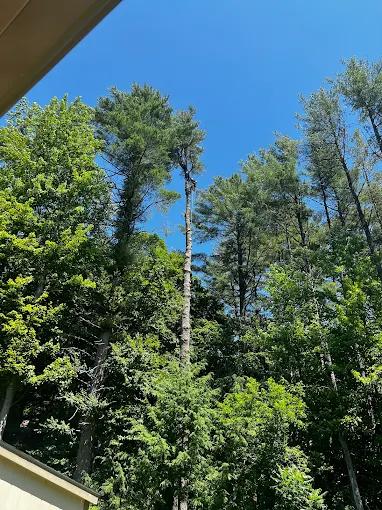
When I walk a property, I am not just looking at the obvious stuff. I am looking at how the canopy interacts with the structures and clearance zones below. A dead branch in an open field is a straightforward job. A dead branch over a hospital entrance, a power service line, or a heavily used sidewalk involves a different kind of planning.
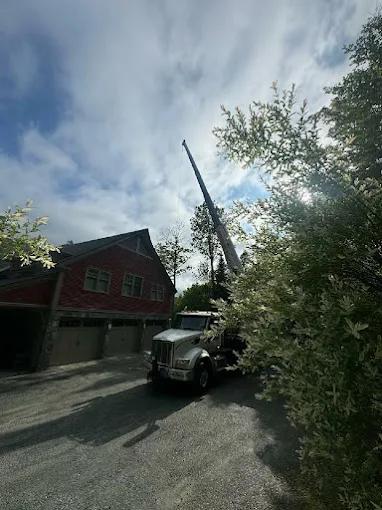
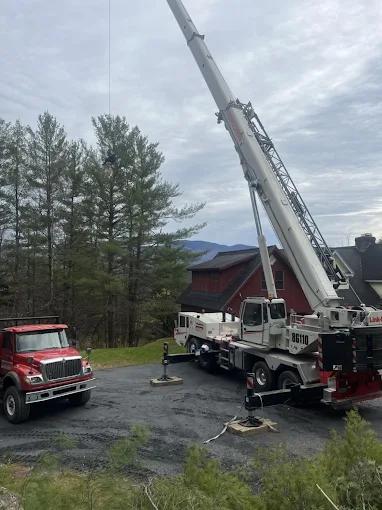
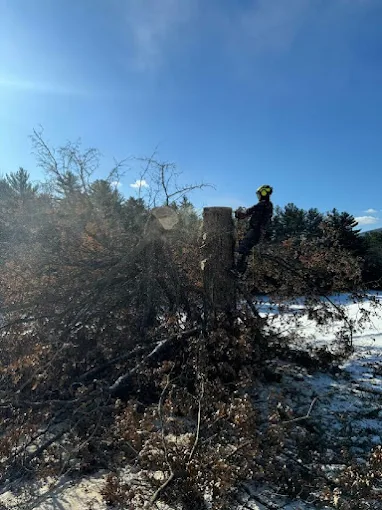
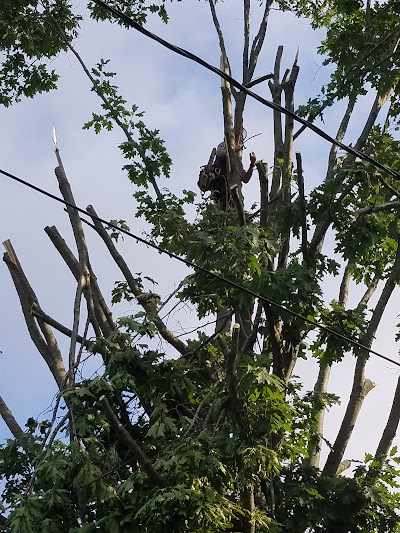
Rigging systems matter here. The goal is not just to cut the branch off. The goal is to control where it goes during removal. That distinction is especially important in tight areas where dropping weight onto a surface below is not acceptable.
I also look at the surrounding live tissue. Deadwood in mature sugar maples or white ash often signals something happening deeper in the tree. Whether it is a wound that has not fully closed, a decay pocket forming at a co-dominant stem, or the beginning of structural decline, the dead branch is sometimes the visible sign of a larger issue. Taking it down without noting what caused it is missing half the picture.
Lamoille County's Tree Canopy and Why It Creates a Specific Kind of Risk
The Morrisville and Morristown area carries a heavy mix of mature hardwoods. Sugar maple, American beech, white ash, and yellow birch are the trees that show up most often on older residential and commercial properties around the Greater Lamoille Valley.
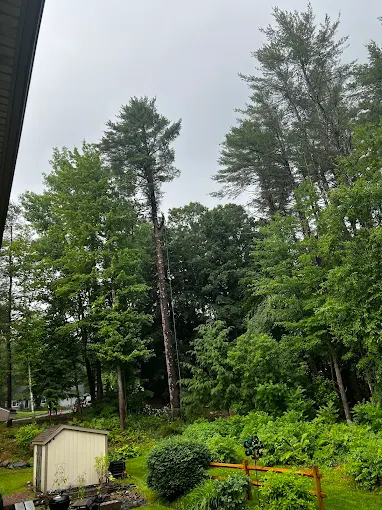
White ash, in particular, has become a real concern across Lamoille County. The emerald ash borer, first detected in Vermont in 2018, has been spreading through the state's ash population. Trees infested by this beetle can die within a few years, and what makes EAB-killed ash especially difficult is that the wood turns brittle faster than most people expect. A standing dead ash does not behave like a normal removal. The wood can give unpredictably, which changes how the job is approached from the ground up.
If a property near Copley Hospital has large ash trees that have not been assessed recently, that is worth acting on. The canopy may look full until it does not, and the transition can be faster than most homeowners realize.
What a Homeowner Can Observe Without Any Special Tools?
You do not need a climbing saddle or years of experience to notice some things. Stand back and look at the tree from a distance. A few observable signs that should prompt a professional assessment:
Branches with no leaf growth by midsummer that adjacent branches still carry
Bark that is splitting or peeling without obvious mechanical damage
Woodpecker activity concentrated on a single section of trunk
Visible cracks at branch junctions, especially where two stems are nearly the same size
A general thinning at the top of the canopy that was not there a few seasons ago
None of these are definitive conclusions. But any one of them near a high-traffic area like the Washington Highway corridor in Morrisville is enough reason to have someone take a proper look.
Why Hospitals and Busy Properties Require a Different Mindset?
A hospital campus or a property adjacent to one comes with a particular set of conditions. Traffic does not stop for weather. People are moving through at all hours, including the stretches of time right after a storm when branch failure risk is highest.
That is not a small consideration. It means the window for "we'll get to it" is narrower than on a private residential property where you can close off a section of yard temporarily. When the access route to an emergency department runs past an overhanging tree, the clearance zone around that tree matters in a way that goes beyond aesthetics.
I run Iconic Tree Care out of Morristown, and this kind of job comes up more often than people might expect. Homeowners and property managers in Lamoille County who want to understand what this type of work actually involves can find out here before making any decisions.
When Is the Right Time to Have This Done in Vermont?
This question comes up often. The short answer is that for deadwood removal, there is rarely a wrong time. Dead wood does not have a growing season. The tree is not going to heal around it or change what is happening at the attachment point.
That said, late winter and early spring tend to be the most practical windows for this kind of work in Vermont. The ground is still firm enough to support equipment without damaging landscaping. The canopy is open without leaves, which makes inspection easier and gives a crew cleaner sightlines for rigging. And you get ahead of the ice-out season, when the combination of thaw-freeze cycles and wind often triggers the branch failures that have been building over winter.
Waiting until a storm does the job for you is not really a plan. It is just leaving the timing to chance.
The Thing Competing Pages Tend to Skip
Most content you will find on deadwood removal treats it as a pruning question. Something about tree health, canopy management, and keeping a tree looking good. That framing is not wrong, but it misses the more immediate issue.
For properties in Morrisville and the broader Morristown area where trees are growing near roads, building entrances, or busy parking areas, deadwood is a liability question as much as a tree health question. The structural integrity of a dead branch does not depend on what season it is. It depends on the physics of how it is attached and what the local weather decides to do next.
Anyone who has walked the grounds around People's Academy or along the Lamoille River trail after a late-winter ice event has seen what that looks like. Branches down across walkways and parking areas. Some of them were visible dead wood. Some were not obviously compromised until they were on the ground.
If you want a second set of eyes on a property in Lamoille County, see details on how other property owners in the area have approached this kind of work and get in touch from there.
A Thought on How People Relate to the Trees Around Them
There is a tendency to see tree work as something you do when something goes wrong. A branch falls, a storm passes through, a neighbor says something. But the trees that cause problems near busy properties almost always gave signals. The signs were there. They just were not the kind of thing most people know to look for.
That is not a criticism. Most homeowners and property managers are not arborists. But the closer a tree is to people and vehicles moving through every day, the more it rewards a little attention before something forces it.
Michael Thompson
Owner, Iconic Tree Care
5315 Randolph Rd, Morristown Vermont 05661
802-338-0802
https://iconictreecare.com/
Write a comment ...