
Tree trimming cuts back specific branches to improve health, shape, or safety while the tree stays standing. Tree removal takes the entire tree down, roots and all in most cases, because it can no longer be saved or it has become a hazard. The two jobs use some of the same tools, but the decision behind them is completely different.
If you live in Johnson, Vermont, you're probably asking this question after a storm, not before one. A limb drops, the tree leans a bit more than it used to, or bark starts peeling in patches, and now you need to know which service actually fits.
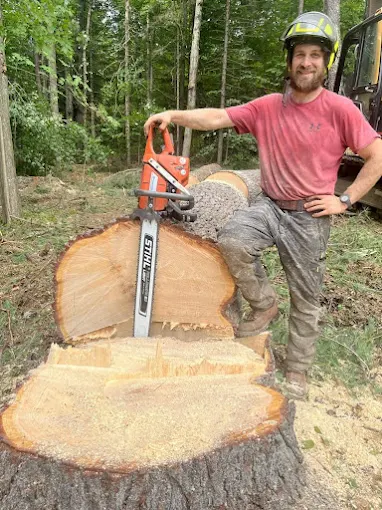
Eighteen-plus years of climbing and cutting trees around Lamoille County taught me one thing: this exact question comes up on nearly every estimate I run. I'm Michael Thompson, and Iconic Tree Care is the business I built around answering it honestly.
The line between trimming and removal isn't always clear from the ground. A tree can look rough and still be worth trimming. Another can look fine from your driveway and already be failing at the root.
When Trimming Is the Right Call?
Trimming fixes a problem in part of the tree, not the whole structure. If the trunk is sound and the roots are intact, cutting back damaged or overgrown branches usually takes care of it.
You'll typically want trimming for deadwood that could fall, branches rubbing your roofline, limbs crowding power lines, or growth blocking light from a garden. None of that means the tree itself is dying.
Yellow birch and paper birch, both common in this part of the county, tend to hold onto damaged limbs longer than you'd expect. Trimming those out early keeps the rest of the crown healthy, so a bigger break during a winter storm becomes less likely.
Trimming isn't only for damage control either. Sugar maples and red maples make up a large share of the trees on local properties, and they respond well to periodic shaping that encourages even growth and better airflow through the canopy.
When Removal Becomes Necessary?
Removal enters the picture once the core structure is compromised, not just a branch or two. Watch for a split trunk, root rot, a lean that developed suddenly, or dieback spread across the crown instead of one section.
Root damage puts you in different territory than branch damage. You can't prune roots back to health the way you can a limb, so once decay reaches that level, removal is usually your only option for cutting the risk.
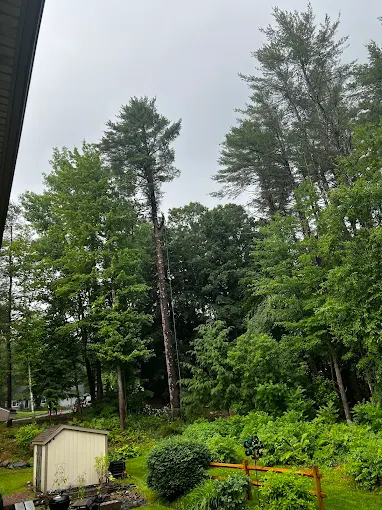
Heavy wet snow loads hit Lamoille County most winters, and I've watched hemlocks and spruces with shallow root systems shift several inches at the base without fully falling. That's a structural failure already underway, and trimming won't fix it.
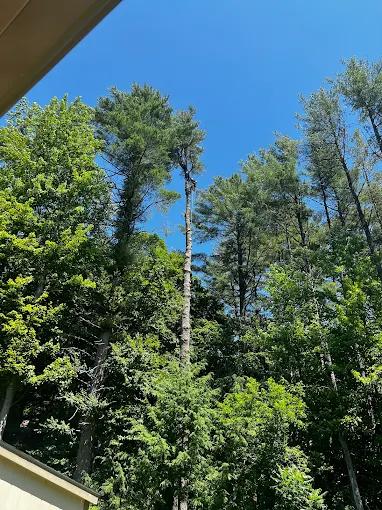
Proximity to a house, driveway, or power line changes your calculation too. A declining tree standing alone in an open field can sometimes wait. The same tree ten feet from your bedroom window usually can't.
The Homeowner Question Underneath the Question
What you're really asking, most of the time, is whether the tree can be saved or whether you're going to lose it regardless. That's fair, and you deserve clarity before spending money either way.
A tree with dead branches but a solid trunk and healthy root flare is very often savable through trimming alone. One with fungal conks on the trunk, or bark sloughing off in large sheets down low, is showing you the internal wood is already gone.
Insurance factors into this too. If a declining tree overhangs your structure and eventually falls, coverage can hinge on whether you had it assessed and addressed beforehand. That's worth knowing before storm season, not after it hits.
If you're weighing whether a tree on your property needs a trim or a full removal, it helps to have someone walk the property and look at trunk condition, root flare, and lean before you decide. Read more about how that assessment process works.
How to Tell the Two Apart Without Guessing?
A few checks separate a trimming job from a removal job before anyone climbs the tree:
Trunk integrity: cracks, cavities, or seams running vertically usually point toward removal.
Root flare: heaving soil, mushrooms at the base, or exposed decayed roots are structural warnings.
Crown percentage affected: dieback in one section suggests trimming, dieback across most of the crown suggests decline.
Lean direction and speed: a lean that's visibly increased in the past year is more serious than one that's held steady for a decade.
Proximity to targets: how close the tree stands to your house, driveway, fence, or line changes the urgency either way.
None of these checks need special equipment. You just need to know what to look for, and that's often the real gap between a homeowner's guess and a trained assessment.
What This Costs Homeowners in Practice?
Trimming gets priced by scope: number of limbs, height, and access. Removal is priced differently, since it accounts for the entire tree's size, its lean relative to structures, and how it has to come down piece by piece near a house or driveway.
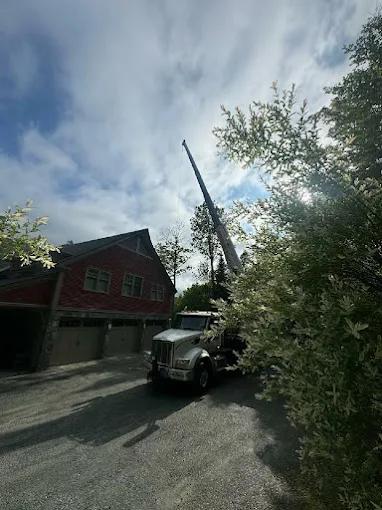
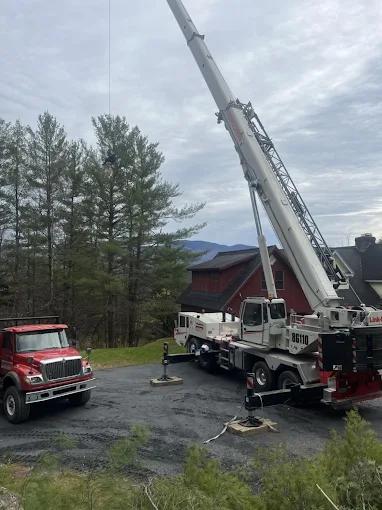
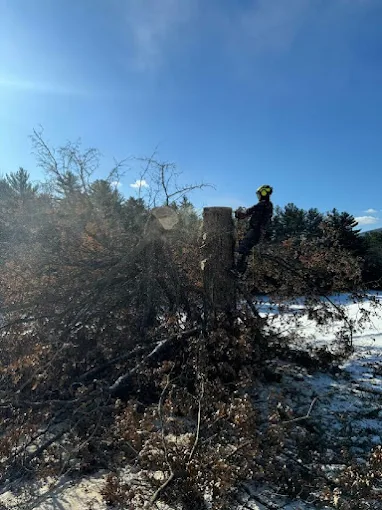
A large tree removed near a structure in a tight yard costs more than the same species removed in an open lot, since the crew has to rig and lower sections instead of felling it in one piece. That difference in method, not the tree itself, is usually what explains the price gap you notice between quotes.
Trusting Who You Hire for Either Job
Whether you need a trim or a full removal, the person doing the work should be insured and able to explain plainly why they're recommending one over the other. A vague answer is often a sign they haven't actually checked the root or trunk condition.
Ask what happens to the wood and debris afterward, whether the stump gets ground or left, and how they plan to protect your lawn, driveway, or nearby plantings during the work. Those answers tell you more about a company's process than any sales pitch will.
After 18 years of doing this work locally, the calls that go wrong are almost always the ones where nobody looked closely at the trunk or roots before recommending a plan.
You can see more about how Iconic Tree Care handles jobs across the area, along with reviews from other homeowners, through our Learn more listing.
A Tree That Looks Fine Isn't Always Fine
The hardest cases aren't the obviously dead trees. Those decisions make themselves. The hard cases are the trees that still leaf out every spring while quietly losing structural integrity underneath, and that's exactly why a second opinion matters more than a quick glance from the road.
Trees on your property change slowly, then suddenly. Knowing which category a tree falls into, trim or remove, is less about the species and more about paying attention before the tree decides for you.
FAQ
Does a tree need to be completely dead before it should be removed?
Not at all. Removal comes down to structural risk, not whether the tree still has leaves. A tree can look green and still have a compromised trunk or root system underneath.
Can a leaning tree be straightened instead of removed?
Sometimes. If the lean is minor and you catch it early, cabling or bracing can stabilize the tree. A lean that developed quickly or involves root movement usually can't be corrected that way.
How often should trees be trimmed to avoid needing removal later?
Most healthy shade trees do well with a check every two to three years. Storm damage or visible deadwood should get addressed sooner, though, rather than waiting on a scheduled trim.
Will removing one large tree affect the trees around it?
It can. Neighboring trees that relied on the removed tree for wind buffering sometimes end up more exposed, so it's worth mentioning if several trees stand close together.
Is it cheaper to trim a struggling tree instead of removing it?
Trimming costs less upfront. But if the core problem is structural rather than limited to a few branches, trimming alone won't stop the tree from failing later, and that can mean paying twice
Iconic Tree Care
5315 Randolph Rd, Morristown Vermont 05661
802-338-0802
https://iconictreecare.com/
Write a comment ...