
Walk the Meadow Spur Trail in Stowe this spring and you will see it. Maples that looked fine last fall are now showing thin crowns, dead tips, and bark that is starting to peel away in long strips. Most of these trees took a hit during last summer's storms, and they are only now telling us about it.
This is one of the most common questions I get from homeowners in this part of Lamoille County. A storm comes through, the tree looks shaken up but still standing, and everyone moves on. Then months later, sometimes not until the following spring, the real damage shows up.
Why Storm-Damaged Maples Don't Show Trouble Right Away
A maple can take a serious hit and still leaf out the next morning like nothing happened. The leaves were never the problem. The wood underneath was.
When a heavy limb tears loose or a trunk gets twisted by wind, the crack often runs deeper than what you can see from the ground. Wood fibers separate along the grain, sometimes for several feet, without the bark splitting open at all. The tree keeps moving water and nutrients through the parts that still work, so it can look healthy through the rest of the season.
The damage becomes visible the following spring because that is when the tree has to push new growth through tissue that is no longer functioning the way it should. A branch that should have leafed out fully comes in sparse. A section of canopy that was full last year now has dead wood mixed in with green. That gap between the storm and the symptoms is exactly why so many homeowners near Meadow Spur Trail are confused about what happened to a tree that "seemed fine" last fall.
What a Cracked Limb Looks Like From the Inside
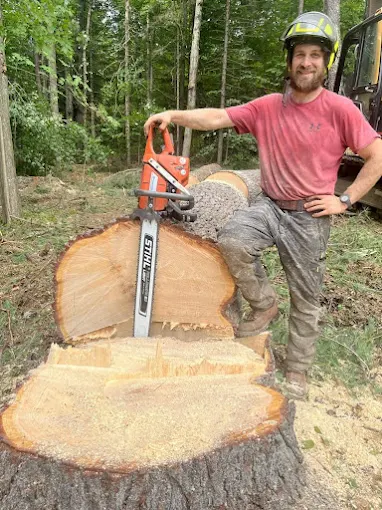
If you cut into a branch that snapped during a storm, you would usually see one of two things. Either the wood is cleanly broken, which heals reasonably well, or the wood is torn and shredded along a long section, which does not heal well at all.
That second type is the one that causes delayed problems. Torn wood exposes a much larger surface area to moisture, fungi, and insects. Over the following months, decay organisms move into that wound and start working their way into the trunk. None of this is visible from outside the tree until the canopy above that section starts to thin or die back entirely.
Sugar maples and red maples, the two species you see most often along Meadow Spur Trail and through the rest of Stowe, are both prone to a structural issue called included bark. This is where two large limbs grow so close together that bark gets pinched between them instead of forming a solid union. Those joints are weak points, and they are often where storm cracks start, even when the crack itself stays hidden inside the union for a season or more.
What Homeowners Are Noticing This Spring
I have been getting calls from people in Stowe and the surrounding towns describing the same pattern. A maple that took some wind damage last summer looked fine through fall. This spring, one whole side of the tree is bare while the rest leafed out normally.
That kind of one-sided dieback is one of the clearest signs of internal storm damage. It usually means the root or trunk tissue feeding that section of the canopy was compromised, even if no branch actually broke off at the time. Another sign people ask about is bark that looks loose or is starting to lift away from the trunk in patches. That is often a sign the cambium layer underneath, the thin living layer just under the bark, was killed off by the original injury and is now drying out and separating.
A question I hear a lot is whether a tree like this can recover on its own. Sometimes, yes, especially if the damage was limited to one or two limbs and the rest of the tree is otherwise healthy. But if the trunk itself was involved, or if the dieback is spreading rather than staying contained, that tree usually needs an evaluation before it becomes a safety problem.
A Yard Off Sterling Brook Road
I am Michael Thompson, owner of Iconic Tree Care, and I have spent years working on trees throughout Lamoille County, including plenty of maples that line properties near Meadow Spur Trail.
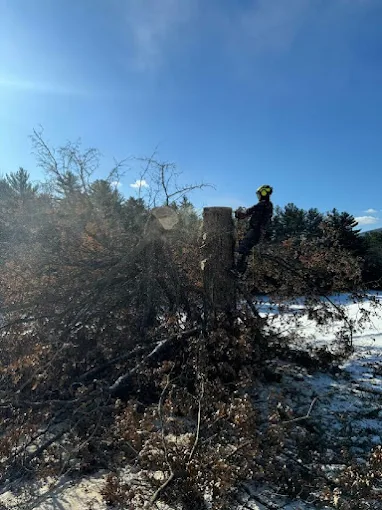
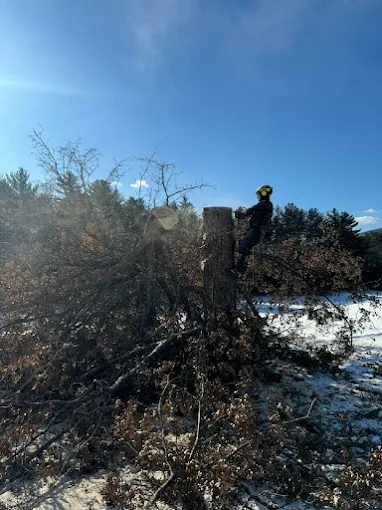
One job that stands out from last fall was a property off Sterling Brook Road. The homeowner had two large sugar maples that lost big limbs during a July storm. The cleanup at the time was straightforward, just clearing debris and removing the broken wood. By the following April, one of those two trees had a section of canopy that never came in. The crack from the original break had run further into the trunk than anyone realized, and decay had already started.
We were able to remove the affected limb structure before it became a bigger hazard, and the tree is recovering well this year. If you have a maple that took storm damage last season and you are not sure what to look for now, you can find out more about how this kind of cleanup and follow-up evaluation works.
Why Lamoille County Maples Take Longer to Bounce Back
A few things make this slower-developing damage more common here than in some other areas. Forest tent caterpillar populations have been heavy across Lamoille County in recent years, and a tree that was already defoliated by caterpillars going into a storm has fewer reserves to recover from a broken limb or a cracked trunk.
Our winters add another layer to this. A maple with a hidden crack from a summer storm goes into winter with that wound still open. Freeze and thaw cycles through the cold months can widen small cracks, especially around included bark unions, turning what might have been a minor injury into a much larger one by the time spring arrives.
This is also why a tree near the Stowe Recreation Path or up toward Mount Mansfield can look completely normal in October and show real trouble by May. The combination of storm injury, a full Vermont winter, and the demands of spring growth all stack on top of each other.
What to Do if You Spot This on Your Property
If you have a maple that took storm damage last summer and you are seeing thin or dead sections this spring, the first step is just to take a close look at where the dieback is. Is it limited to one limb, or is it spreading from a central point on the trunk?
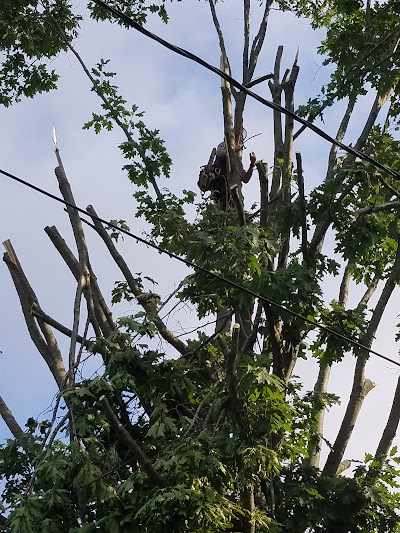
A tree with dieback isolated to one or two branches off a single union often just needs that section removed cleanly. A tree with dieback spreading from the trunk itself, especially if you can see cracked or loose bark at the base of that dead section, needs a closer look before anyone gets near it with a chainsaw or a ladder.
People also ask whether they should prune storm-damaged limbs themselves once they spot the dieback. For anything within reach from the ground, removing small dead twigs is fine. For anything involving a ladder, a chainsaw, or a limb over a driveway, walkway, or roofline, it is worth having someone look at the whole tree first. The visible dead branch is sometimes the smallest part of the problem.
Homeowners around Stowe and Lamoille County who want to see what other properties have dealt with after storm damage can see here for examples of past work and reviews from neighbors who had similar issues.
A Closing Thought
The maples along Meadow Spur Trail have been through a lot of weather over the decades, and most of them handle it fine. What gets people is the gap between the storm and the symptom, that stretch of months where everything looks normal and then suddenly does not. If there is one thing worth remembering from a season like this, it is that a tree's reaction to a storm is not always finished the day the wind dies down.
Iconic Tree Care
5315 Randolph Rd, Morristown, Vermont 05661
802-338-0802
https://iconictreecare.com/


Write a comment ...