
Most of the wood from a residential removal in Morristown stays close to home. Trunk wood gets bucked into rounds for firewood, branches and brush go through a chipper, and the homeowner usually decides upfront whether they want to keep the material, have it hauled away, or split the difference. The exact split depends on the tree species, the size of the job, and where the debris needs to go.
I am Michael Thompson, owner of Iconic Tree Care. I have spent years cutting, chipping, and hauling wood off properties around Morrisville and the surrounding hills, and the question of "what happens to all this" comes up on almost every job.
Homeowners rarely ask this before the crew shows up. They ask it standing in the yard, looking at a pile of logs and a mountain of brush, wondering how any of it leaves the property.
Trunk and Limb Wood: Firewood or Haul-Away
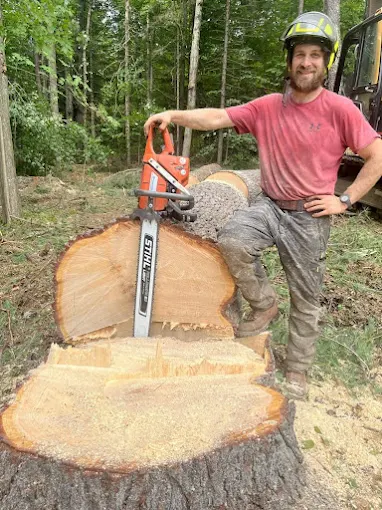
Once a tree is down, the crew separates it into two categories almost immediately. Straight sections of trunk and large limbs get cut into rounds, usually sixteen to eighteen inches long, sized for a standard wood stove or fireplace.
Sugar maple, beech, and hemlock are the trees we take down most often in this part of Lamoille County, and all three burn differently. Maple and beech split clean and season into solid firewood. Hemlock burns fast and leaves more ash, so most homeowners skip it for heating and let it go to the chipper or a slash pile instead.
If a homeowner wants to keep the wood, we stack the rounds where they ask, usually near a garage or woodshed, and leave splitting to them. Unsplit rounds take a full season or more to dry before they burn well, sometimes longer for dense maple.
Because we assess every tree species and site condition before cutting, the crew can tell you on the spot which sections are worth keeping. Sugar maple, American beech, eastern hemlock, and white pine all face different risks in this region, and that same variation shapes how the wood behaves once it is down. A homeowner deciding whether removal makes sense for a specific tree can Learn more about how that assessment works before the job starts.
Why Not Every Tree Makes Good Firewood?
A common misconception is that any removed tree can heat a house. That is not true. Diseased or pest-damaged wood, especially trees taken down because of emerald ash borer or beech leaf disease, often has softened or discolored wood that burns poorly and can carry pests into a woodpile.
Rot-compromised sections are another exception. Wood with heavy internal decay is lighter, punkier, and burns fast without much heat output. We separate that material out and send it to the chipper rather than stacking it as firewood.
Where the Branches and Brush Go?
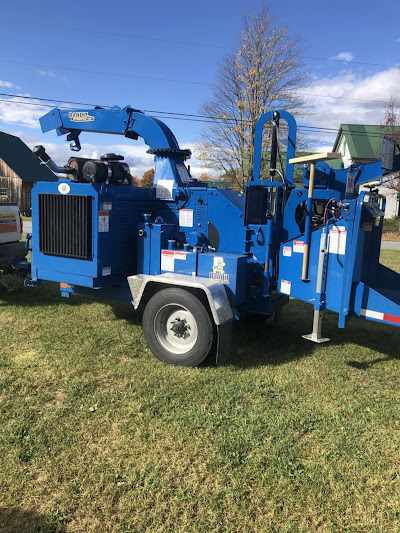
Limbs under about four inches across, along with all the leafy and needled material, get run through a chipper on site. This is the fastest way to clear a yard after a large removal, since branches take up far more space than the trunk wood.
Chipping happens right where the tree came down whenever access allows. On tighter lots, closer to Park Street or Bridge Street, crews sometimes need to drag brush to a wider spot in the driveway before running it through the machine.
What Homeowners Can Do With the Chips?
Wood chips have a second life most people do not think about. Fresh chips make solid mulch for garden beds, around tree bases, or along a fence line, and they break down slowly enough to suppress weeds for a season or more.
Chips from diseased trees are the exception. Material from an ash tree with emerald ash borer, or a beech with beech leaf disease, should not be spread as mulch on the same property. Pests and pathogens can survive in chipped wood, so that material typically leaves the site instead.
A simple way to think about it: healthy-tree chips are useful mulch, diseased-tree chips are debris that needs to go. Confirming which category applies to a specific tree is worth doing before deciding to keep any of the material.
Hauling and Disposal
When a homeowner does not want to keep the chips or the wood, the crew loads it out the same day, usually straight into a chip truck or a trailer for the log sections. Vermont's shallow mountain soil near slopes like those below Mount Mansfield means driveway access can be tight, and that affects how much equipment can reach the pile without tearing up the lawn.
Larger removals, especially trees over two feet in diameter, produce more material than a single load can handle. On those jobs we schedule a second trip or stage the wood at the edge of the property until pickup.
Seasonal Timing Changes the Plan
Winter removals leave frozen ground, which actually makes hauling easier since equipment does not sink or rut the lawn. Spring mud season is the opposite. Wet, soft ground during Vermont's thaw limits what trucks can drive across, so crews sometimes chip on site and carry brush out by hand rather than driving equipment over saturated soil.
Storm-related removals bring their own version of this question. After a heavy snow load or a windstorm snaps limbs across several properties at once, chip and firewood volume goes up fast, and disposal scheduling becomes the bottleneck rather than the cutting itself.
Deciding What to Keep
A few questions help homeowners sort this out before the crew arrives. Do you burn wood regularly, or would rounds just sit and rot in a corner of the yard. Do you have a place to stack and season wood for a year. Is the tree species one that burns well, or would you rather it all go to chips and disposal.
Answering those in advance saves time on the day of the job, since the crew can separate wood by destination as they cut instead of sorting it afterward.
A Related Concern: Storm Damage and Standing Risk
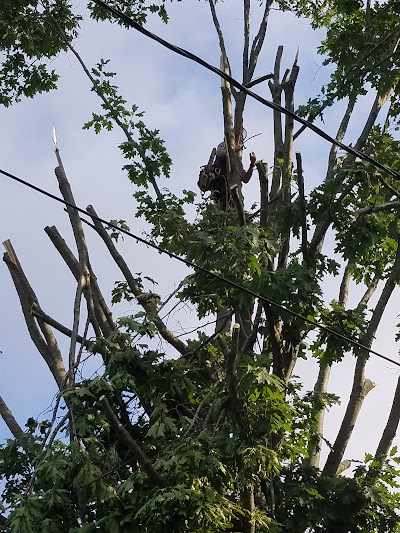
Wood disposal often comes up alongside a bigger question: whether a tree needed to come down in the first place. Storm-weakened trees near a house or driveway carry risk that goes beyond firewood planning, and property owners in this area sometimes want a second opinion before committing to a full removal.
For homeowners weighing that decision, reviewing the company's history and reputation directly is worth the five minutes. You can See here for our Google Business Profile, which shows past reviews and current business details.
What a Trustworthy Crew Looks Like?
Not every removal job is handled the same way, and homeowners deciding between companies often cannot tell the difference from a quote alone. A licensed and insured crew should be able to explain, before cutting anything, what will happen to both the trunk wood and the brush.
If a company cannot answer where the chips are going or whether the wood is safe to keep, that is worth asking about directly. Clear answers on disposal usually mean clear answers on the rest of the job too.
Trees on a Vermont property rarely come down for convenience. Removal is almost always a response to disease, storm damage, or a genuine safety concern, and what happens to the wood afterward is really the last chapter of that story. Handled well, it leaves a homeowner with either a stocked woodshed or a clean yard, and either outcome closes the job the right way.
FAQ
Is it legal to keep firewood from a tree removed on my own property in Vermont?
Yes. Wood from a tree on your own property is yours to keep, split, and burn, though local burn ordinances may still apply to how you use it.
How long does it take for green firewood to be ready to burn?
Most hardwood, including maple and beech, needs six months to a year of seasoning after splitting before it burns efficiently. Unsplit rounds take longer.
Can wood chips from a diseased tree spread that disease to other trees on my property?
It depends on the pathogen. Chips from trees affected by emerald ash borer or beech leaf disease should not be spread near healthy trees of the same species, since some pests and pathogens can persist in chipped material.
Do I get charged extra if I want to keep the firewood instead of having it hauled away?
Not typically. Keeping the wood often reduces hauling costs since less material leaves the property, though pricing depends on the size of the job.
What size chipper is used for residential jobs in this area?
Most residential jobs use a towable chipper capable of handling branches up to about six inches in diameter, sized to fit through standard driveway access.
Iconic Tree Care
5315 Randolph Rd, Morristown Vermont 05661
802-338-0802
https://iconictreecare.com/
Write a comment ...