
A free on-site tree assessment in Duxbury, VT covers root stability, trunk and canopy condition, disease or pest signs, proximity to structures or power lines, and a written recommendation. It usually takes 20 to 40 minutes depending on lot size and tree count. Nothing is cut or removed during the visit itself.
Most homeowners call after noticing something specific. A leaning trunk near the driveway. A branch that dropped in the last windstorm. Bark that looks different than it did last summer.
That first phone call is really a triage question: is this tree fine, or does it need attention now. The on-site visit is where that question actually gets answered.
What Happens Before the Assessment?
A short conversation usually comes first. What the homeowner has noticed, how long it's been going on, and whether the tree sits near the house, a driveway, or a septic line.
Duxbury properties often sit close to the Winooski River or up along the lower slopes near Camel's Hump, and that location changes what we're checking for. Riverside soil holds more moisture, which affects root health differently than the drier, rockier ground higher up toward the Monroe Trail area.
We ask about recent storms too. A tree that looked stable in July can develop hidden stress after a heavy wind event in October, and the homeowner may not connect the two.
Walking the Property: What Gets Inspected?
The visit starts at the base of the tree, not the canopy. Root flare, soil heaving, and any fungal growth at the trunk base tell us more about long-term stability than anything visible thirty feet up.
From there we move to the trunk. Cracks, included bark where two limbs join too tightly, cavities, and old wounds that never closed properly all get noted.
The canopy comes last. Dead limbs, thinning crown density, and unusual leaf color or drop pattern each point to different causes, and we separate those causes rather than lumping them into one general diagnosis.
Learn more about how this inspection process connects to the pruning, removal, or cabling work that sometimes follows it.
Species-Specific Concerns Around Duxbury
Sugar maple is the most common tree we assess on Duxbury properties, and it's also one of the more storm-vulnerable species once decay sets into a major limb union. Included bark in a maple's crotch is a common finding, and it's one that's easy to miss from the ground.
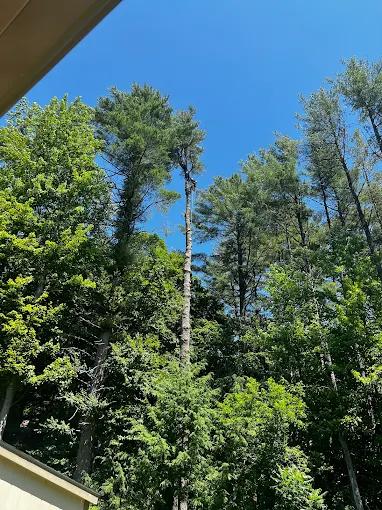
White pine shows a different pattern. Older pines along the Route 100 corridor often carry weight unevenly after years of wind loading from one direction, and that imbalance doesn't show up until we look at root plate movement at the base.
Ash trees get a specific check regardless of how healthy they appear. Emerald ash borer has moved through Washington County, and by the time canopy dieback is visible, the tree has often already lost significant structural wood underneath the bark.
Reading the Land: Why Location Changes the Diagnosis
A tree on flat, well-drained soil near the village center holds up differently than one on the steeper grade closer to Camel's Hump's lower flank. Slope affects root anchoring, and root anchoring is most of what determines whether a tree fails in a windstorm or just sheds a branch.
Properties closer to the Winooski River carry a separate risk. Periodic high water saturates soil at the root zone, and saturated soil loses much of its ability to hold a root system in place during wind events.
I've been working on trees in this part of Vermont for years, and the pattern holds pretty consistently. Trees within a hundred feet of moving water need a different lens than trees on a dry hillside, even when both look equally healthy from the road.
What "Before" Actually Means in the Report?
The before condition is documented with specifics, not general impressions. Trunk diameter, estimated age where relevant, visible defects, and proximity distance to the nearest structure all go into the written notes.
Photos are taken from multiple angles, especially of anything that will change once work is done. This matters most when a homeowner is deciding between removal and a lesser option like crown reduction or cabling.
Without a documented before state, it's hard to have an honest conversation about whether a recommendation was necessary or excessive. The report exists so the homeowner isn't just taking someone's word for it.
What "After" Looks Like, and Why It's Rarely Just Removal?
Removal is the most visible after state, but it's usually the last recommendation, not the first. A tree with a single structural defect and an otherwise sound root system is often a better candidate for cabling or selective pruning than outright removal.
Crown reduction changes wind load on a tree without eliminating it. This is common advice for maples with a heavy lean toward a house or driveway, where the goal is reducing risk rather than losing the tree entirely.
Some assessments end with no recommended work at all. A tree that looks concerning from the ground sometimes turns out to be structurally sound once the root flare and trunk are actually inspected up close.
When a Cosmetic Issue Is Actually a Structural One?
Homeowners often ask how to tell the difference between something that looks bad and something that's actually dangerous. Bark discoloration or a few dead twigs at the crown's edge is usually cosmetic and slow-moving.
A crack that runs vertically down the trunk, a root plate that's visibly lifted on one side, or a lean that's gotten worse since last season are different. Those are structural signals, and they change the timeline from "worth watching" to "worth addressing soon."
The honest answer is that most homeowners can't make this distinction from the ground, which is the actual reason the on-site visit matters more than a phone description.
How This Connects to Storm Risk and Insurance?
Vermont ice storms and high wind events are the most common reason a previously stable tree fails. A tree with a documented pre-existing defect that later causes property damage can also affect how an insurance claim gets handled.
Having a written assessment on file, even one that recommended no immediate action, gives a homeowner something concrete if a claims adjuster ever asks whether the tree's condition was known beforehand. It's not the primary reason to get an assessment, but it's a real secondary benefit.
How to Judge Whether the Recommendation Is Trustworthy?
A fair assessment explains why a particular action is recommended, not just what the action is. If someone tells you a tree needs removal without pointing to a specific structural defect, that's worth a second opinion.
Ask what would happen if you did nothing for another year. A straight answer to that question tells you a lot about whether the recommendation is driven by the tree's actual condition or by something else.
I've run Iconic Tree Care and worked on properties throughout this part of Washington County long enough to know that most trees don't need drastic intervention. The goal of the visit is an accurate read on the tree, not a sales pitch.
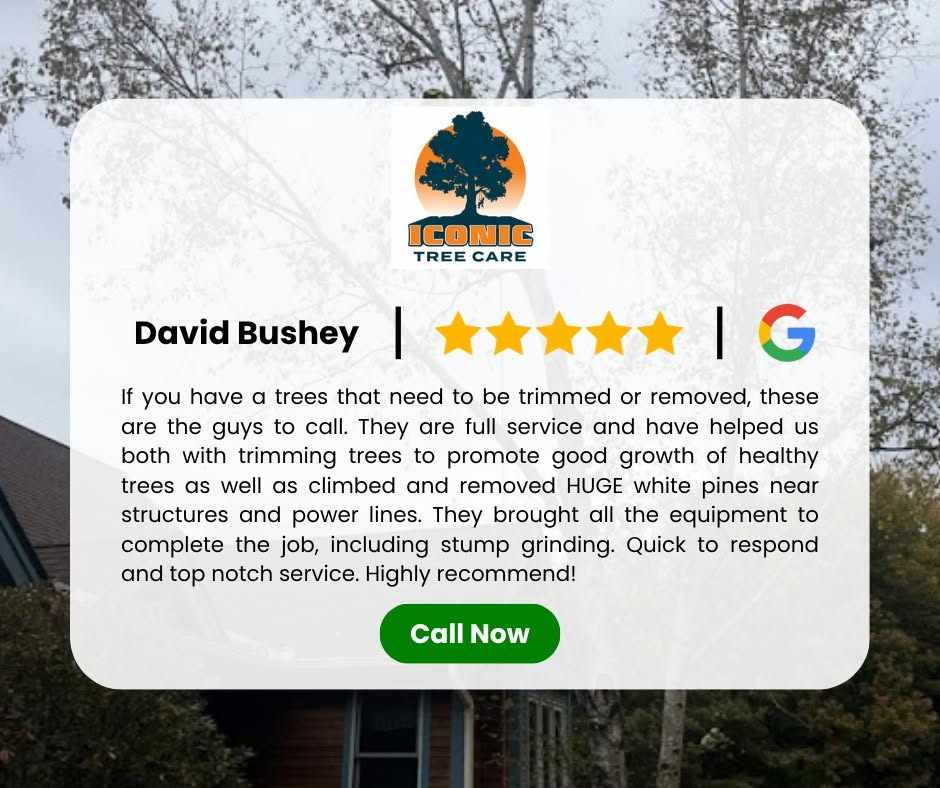
For homeowners who want to see how the business handles reviews and local jobs before scheduling, the See here listing shows past work and direct feedback from other Duxbury and Washington County property owners.
What to Have Ready Before the Visit?
A little preparation makes the visit faster and the report more useful. It helps to know roughly how long a concern has been visible and whether any storm event lined up with when it started.
Note which trees are closest to the house, driveway, or power line
Mention any recent excavation, grading, or construction near the root zone
Point out any limb that has already dropped, even a small one
Flag any tree that's leaned more this year than last
None of this is required, but it shortens the conversation and helps the assessment focus on what actually changed.
A Closing Thought on Living With Trees Here
Trees on a Duxbury property aren't decoration. They're part of the land the same way the river and the mountain are, and they carry real weight, both literally and in terms of what a homeowner has to plan around.
An assessment doesn't try to talk anyone into work that isn't needed. It just tells you, plainly, what's actually going on with the tree in front of you, so the decision that follows is based on the tree itself and not on guesswork.
FAQ
How much does a free on-site tree assessment cost?
It's free, with no obligation to schedule any follow-up work. The visit itself is diagnostic, not a sales appointment.
Do I need to be home during the assessment?
It helps, since we may have questions about the tree's history, but it's not required as long as we have clear property access.
How soon after the assessment can work be scheduled?
That depends on the season and the urgency of what's found. A structural defect near a structure typically gets prioritized faster than routine pruning.
Will the assessment tell me if a tree is a hazard to my neighbor's property?
Yes, if a defect or lean puts a neighboring structure at risk, that gets noted in the report along with the same detail given for your own property.
Can an assessment be done in winter?
Yes. Bare branches actually make some structural issues, like included bark and cavity locations, easier to see than during full leaf-out.
Iconic Tree Care
5315 Randolph Rd, Morristown, Vermont 05661
802-338-0802
https://iconictreecare.com/
Write a comment ...